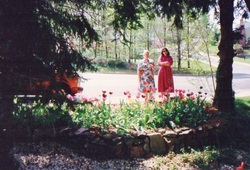
One of the goals of an ornamental garden is the creation
of a sudden impression — a striking moment when plant and setting, light and air combine to produce pleasure or sudden interest. This might be visual but could also be olfactory. The effect of a bank of German irises in full hue includes the scent. Oriental lilies can be as striking in the dark as in the daylight; the rich large molecules they disperse through the air to signal moths, I suppose. But at any rate, a good garden causes sudden pleasure or interest, visual or otherwise. The specifics are a matter of particularity, but very soon the particular details become vague in memory, and one recalls the pleasure of the garden as a whole,
more than particular scenes within the garden. In time all one remembers perhaps is the sunlight through the
leaves, a few favorite kinds of flowers, the fresh floral brightness of an early summer morning, the cool shadows of the garden in the dusk. The point of a garden may be particular plants and flowers, particular moments and scenes, but in time the main achievement of a garden is a remembered atmosphere.
of a sudden impression — a striking moment when plant and setting, light and air combine to produce pleasure or sudden interest. This might be visual but could also be olfactory. The effect of a bank of German irises in full hue includes the scent. Oriental lilies can be as striking in the dark as in the daylight; the rich large molecules they disperse through the air to signal moths, I suppose. But at any rate, a good garden causes sudden pleasure or interest, visual or otherwise. The specifics are a matter of particularity, but very soon the particular details become vague in memory, and one recalls the pleasure of the garden as a whole,
more than particular scenes within the garden. In time all one remembers perhaps is the sunlight through the
leaves, a few favorite kinds of flowers, the fresh floral brightness of an early summer morning, the cool shadows of the garden in the dusk. The point of a garden may be particular plants and flowers, particular moments and scenes, but in time the main achievement of a garden is a remembered atmosphere.
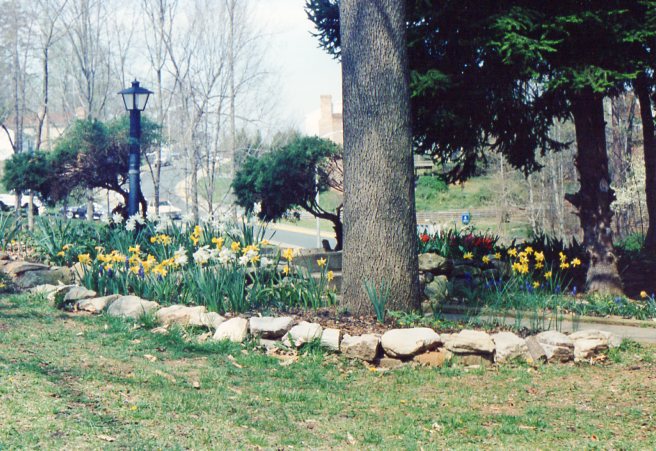
Scale seems irrelevant to this observation. If one is fortunate enough to be, for example, the Emperor of Japan, and have an alley of ancient Cryptomeria 230 feet tall in one’s garden, the sudden pleasure or interest goes without saying, but modest beds of moss may well be as beautiful, striking, and interesting, without ever reaching an inch in height. Miniature gardening and architectural landscaping have a lot in common, except for the bulldozers.
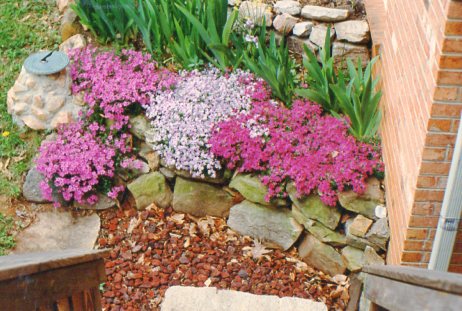
This train of thought brings to mind some favorite garden adages:
-- Gertrude Jekyll’s observation that formal gardens are about masses of color, and that gardening is akin to Impressionist painting.
-- Zen gardening, where a particular effect depends on the particular angle of viewing, and the naturalistic effect is staged.
-- Romantic gardening, or the creation of a tangle, as opposed to specimen planting, where each plant has a place and every plant is in it.
-- And that saying of old rosarians , it is better to put a $5.00 plant in a $10.00 hole than a $10.00 plant in a $5.00 hole. Actually the idea that you could find a $10.00 much less a $5.00 rose of any note tells us just how old the old rosarians were. But over the years I have taken this adage strongly to heart.
-- Gertrude Jekyll’s observation that formal gardens are about masses of color, and that gardening is akin to Impressionist painting.
-- Zen gardening, where a particular effect depends on the particular angle of viewing, and the naturalistic effect is staged.
-- Romantic gardening, or the creation of a tangle, as opposed to specimen planting, where each plant has a place and every plant is in it.
-- And that saying of old rosarians , it is better to put a $5.00 plant in a $10.00 hole than a $10.00 plant in a $5.00 hole. Actually the idea that you could find a $10.00 much less a $5.00 rose of any note tells us just how old the old rosarians were. But over the years I have taken this adage strongly to heart.
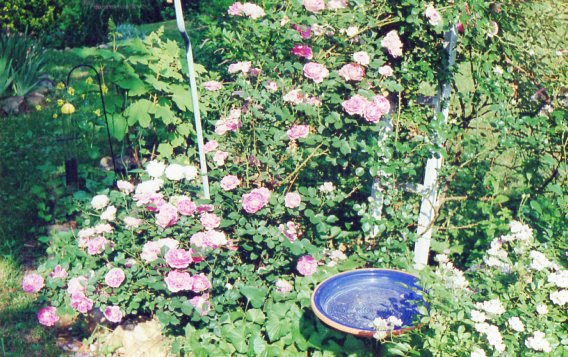
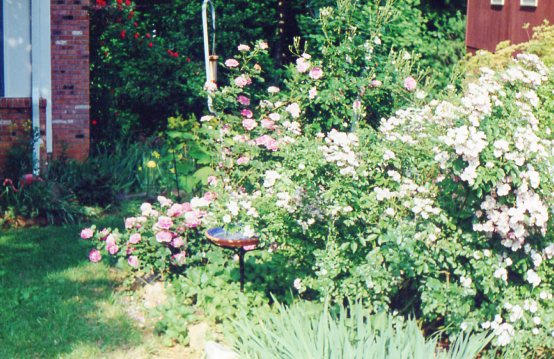
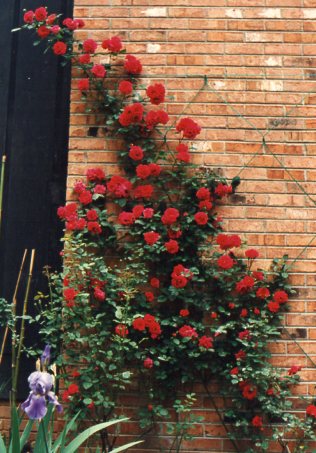
In my last blog I mentioned my original “Dog’s Grave” garden plot on Cottonwood Avenue, back in 1988. In my memory that initial gardening foray was followed by a long slow garden evolution culminating in a sort of climax, the ultimate climax of every garden, which is its abandonment. On sober reconsideration, there was no long slow evolution. Every year included at least two major gardening projects. The inner ring of flower beds around the
house was followed by an outer ring of flower and shrub beds. Those beds were redesigned or expanded every year, as I began my rockwork on the hillside. My brother Alan and I constructed, step by step, a flight of stairs and their adjacent terraces, and then a circular rock garden, filled with whitened pebbles and bordered by azaleas (my “Zen garden”), and finally a second set of more massive terraces, at which point we sold the Cottonwood Ave house and moved to the country. The next step would have been the lower slope of the forested hillside the house was on.
house was followed by an outer ring of flower and shrub beds. Those beds were redesigned or expanded every year, as I began my rockwork on the hillside. My brother Alan and I constructed, step by step, a flight of stairs and their adjacent terraces, and then a circular rock garden, filled with whitened pebbles and bordered by azaleas (my “Zen garden”), and finally a second set of more massive terraces, at which point we sold the Cottonwood Ave house and moved to the country. The next step would have been the lower slope of the forested hillside the house was on.
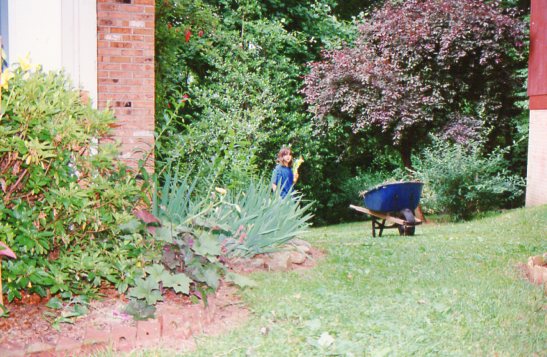
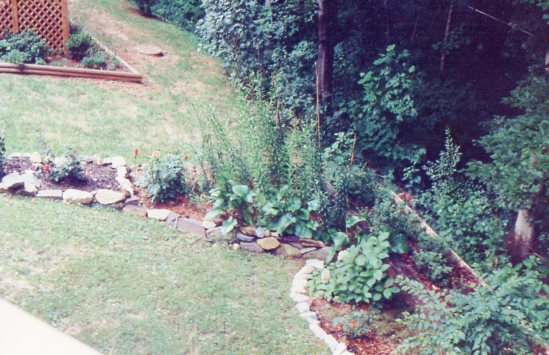
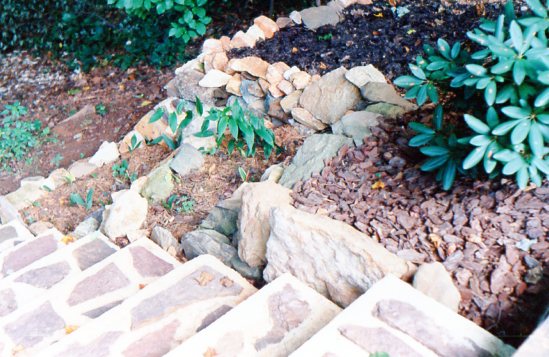
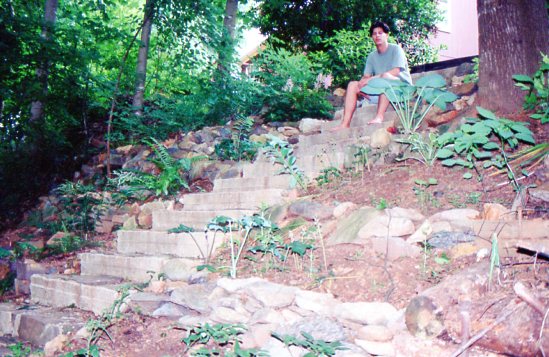
This was just a small city ranch house lot, and none of the beds were very large. The area of all the beds and associated rockwork put together was not terribly large. However, the garden was increasingly enveloping, and fairly soon buried the house in climbing roses, blooming shrubs, and raised rock beds that were fairly carefully landscaped for one visual effect or another. Each year early spring flowers were replaced by late spring flowers, spring blooms by summer blossoms, summer by fall. The beds metamorphosed throughout so whatever there was to be seen appeared to have grown there, with no reference or sign of the spring bulbs sleeping under them, waiting for their day to return.
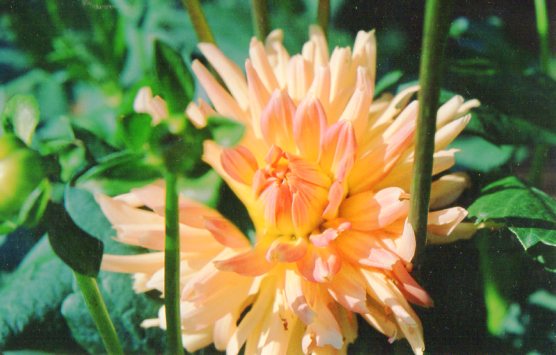
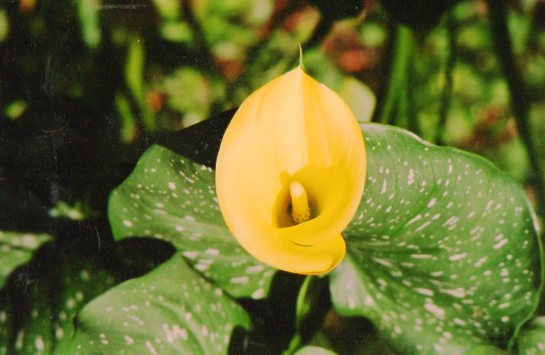
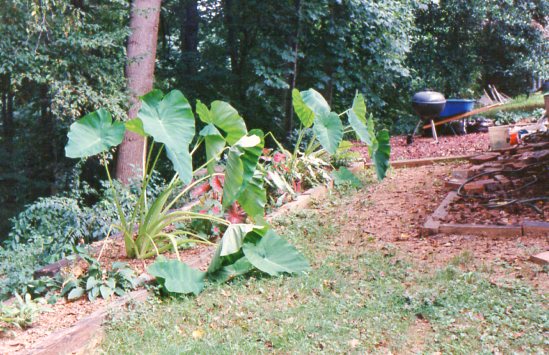
The climax of a garden is the walking away from it. The plants must find their way. Or else another gardener takes over. But if the successor is not a gardener, or is strictly an annual gardener of pansy and petunia inclinations, then the established plants are on their own.
So, what of my once and former garden? The woody shrubs, if they were good shrubs, will have become massive without consulting anyone. The tenderer ones will have died. Roots that need to be divided will have choked out. Breeders will have spread, may even have claimed the entire hillside. The Asian naturalizing woodland oddities that I planted on my hillside terraces will have all have spread downhill by the force of gravity and water — the rare arums, the toad lilies, and many other curiosities, along with reintroduced natives that might have grown on the same spot before, Solomon’s seal, bloodroot, goatsbeard, the black cohosh of the Native Americans, known to the English as fairy candles. None of those will appear domestic now, unless someone with more time than sense has successfully controlled and ordered my old flowerbeds.
Am I curious about what has become of my old garden? Not really. The “me” who built and tended it is as dead as Tuthmosis, a former self on the ladder of selves. The self who is speaking now is a later self, remembering former plants which were given their independence when I moved on. Some will have succeeded past the bounds of propriety and others will have vanished like the pterodactyl and it is no business of mine what vegetal or insectoid dramas are fought out in the old garden these days. The slowly evolving garden on my two acres here in the country is more than enough to fill my gardening dreams.
So, what of my once and former garden? The woody shrubs, if they were good shrubs, will have become massive without consulting anyone. The tenderer ones will have died. Roots that need to be divided will have choked out. Breeders will have spread, may even have claimed the entire hillside. The Asian naturalizing woodland oddities that I planted on my hillside terraces will have all have spread downhill by the force of gravity and water — the rare arums, the toad lilies, and many other curiosities, along with reintroduced natives that might have grown on the same spot before, Solomon’s seal, bloodroot, goatsbeard, the black cohosh of the Native Americans, known to the English as fairy candles. None of those will appear domestic now, unless someone with more time than sense has successfully controlled and ordered my old flowerbeds.
Am I curious about what has become of my old garden? Not really. The “me” who built and tended it is as dead as Tuthmosis, a former self on the ladder of selves. The self who is speaking now is a later self, remembering former plants which were given their independence when I moved on. Some will have succeeded past the bounds of propriety and others will have vanished like the pterodactyl and it is no business of mine what vegetal or insectoid dramas are fought out in the old garden these days. The slowly evolving garden on my two acres here in the country is more than enough to fill my gardening dreams.

 RSS Feed