Miyajima: Temple of the Inland Sea
This is the penultimate post describing the trip my son Alex and I took to Japan. My last post described our journey by bus and train from the mountains of the central Kii Peninsula to Kobe and then Hiroshima.
From the Hiroshima JR station we took the local train at Miyajimaguchi and walked to the adjacent ferry landing for Miyajima. By then it was dark. The Inland Sea was obsidian-black. Golden and silver reflections from lights on the mainland and the island vibrated on the face of the water. Alex bought a beer from the beer vending machine and drank it. Again we marveled at the very existence of beer vending machines. We passed the time openly wondering how we could possibly be where we were. Our paths joint and several to the Miyajimaguchi ferry landing were not without complications.
Of all ferry types, my favorite is the thinly traveled night ferry—the inwardness of the passengers, now that day is over—an oval of light smelling of cold iron and machine oil, rocking gently in an aura of murky green water as the diesels propel it through the invisible dark—reflections from houses and highways as dim and distant as the lights from stars, turned to jewels on the waves. The shore behind no longer matters. The approaching shore is more important, an object of speculation, of curiosity, ultimately of unexpected fact. Passengers become people again during the backing and filling at the dock, the making fast, the getting ashore. A double handful of Miyajima-bound travelers scattered in the dim light of pale street lamps, leaving us to wander back and forth across the couple of hundred yards of waterfront until we found our hotel, or pensione, a family affair.
There is something astonishing about being recognized at a glance by people who never saw you before, greeted by name, assured that since you will want this and that, such matters have been provided for and are waiting for you. I am more susceptible to homesickness than anyone else I have ever met. Even on overnight trips I miss my wife and cats and a towel I can wholeheartedly call my own, and by the second night on any trip I normally feel as if the universe itself has abandoned me in a ditch and moved on. Japan didn’t affect me like that, and Miyajima least of all. For two nights our pensione was home, and it was a good thing, because after a week of travel and no laundry service beyond washing our own clothes in the sink, we and our baggage had become a domestic emergency. But everything got fixed. We had finally found the accommodations seen in Japanese realist cinema—finally here was the tiny cramped room where everything was miniature, where you took off your shoes four steps from the far wall, where it was single file or nothing. It was great. We felt we had earned it. We cleaned up. We went back downstairs for dinner.
From the Hiroshima JR station we took the local train at Miyajimaguchi and walked to the adjacent ferry landing for Miyajima. By then it was dark. The Inland Sea was obsidian-black. Golden and silver reflections from lights on the mainland and the island vibrated on the face of the water. Alex bought a beer from the beer vending machine and drank it. Again we marveled at the very existence of beer vending machines. We passed the time openly wondering how we could possibly be where we were. Our paths joint and several to the Miyajimaguchi ferry landing were not without complications.
Of all ferry types, my favorite is the thinly traveled night ferry—the inwardness of the passengers, now that day is over—an oval of light smelling of cold iron and machine oil, rocking gently in an aura of murky green water as the diesels propel it through the invisible dark—reflections from houses and highways as dim and distant as the lights from stars, turned to jewels on the waves. The shore behind no longer matters. The approaching shore is more important, an object of speculation, of curiosity, ultimately of unexpected fact. Passengers become people again during the backing and filling at the dock, the making fast, the getting ashore. A double handful of Miyajima-bound travelers scattered in the dim light of pale street lamps, leaving us to wander back and forth across the couple of hundred yards of waterfront until we found our hotel, or pensione, a family affair.
There is something astonishing about being recognized at a glance by people who never saw you before, greeted by name, assured that since you will want this and that, such matters have been provided for and are waiting for you. I am more susceptible to homesickness than anyone else I have ever met. Even on overnight trips I miss my wife and cats and a towel I can wholeheartedly call my own, and by the second night on any trip I normally feel as if the universe itself has abandoned me in a ditch and moved on. Japan didn’t affect me like that, and Miyajima least of all. For two nights our pensione was home, and it was a good thing, because after a week of travel and no laundry service beyond washing our own clothes in the sink, we and our baggage had become a domestic emergency. But everything got fixed. We had finally found the accommodations seen in Japanese realist cinema—finally here was the tiny cramped room where everything was miniature, where you took off your shoes four steps from the far wall, where it was single file or nothing. It was great. We felt we had earned it. We cleaned up. We went back downstairs for dinner.
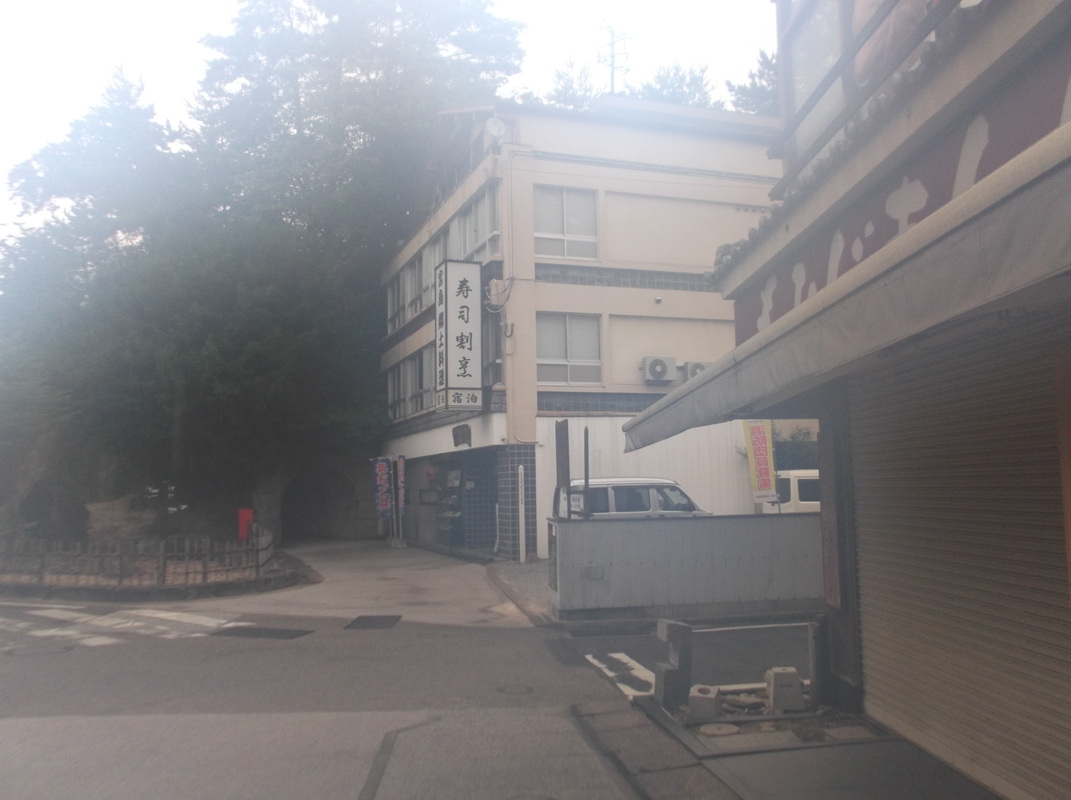
Photo by Gary Mawyer
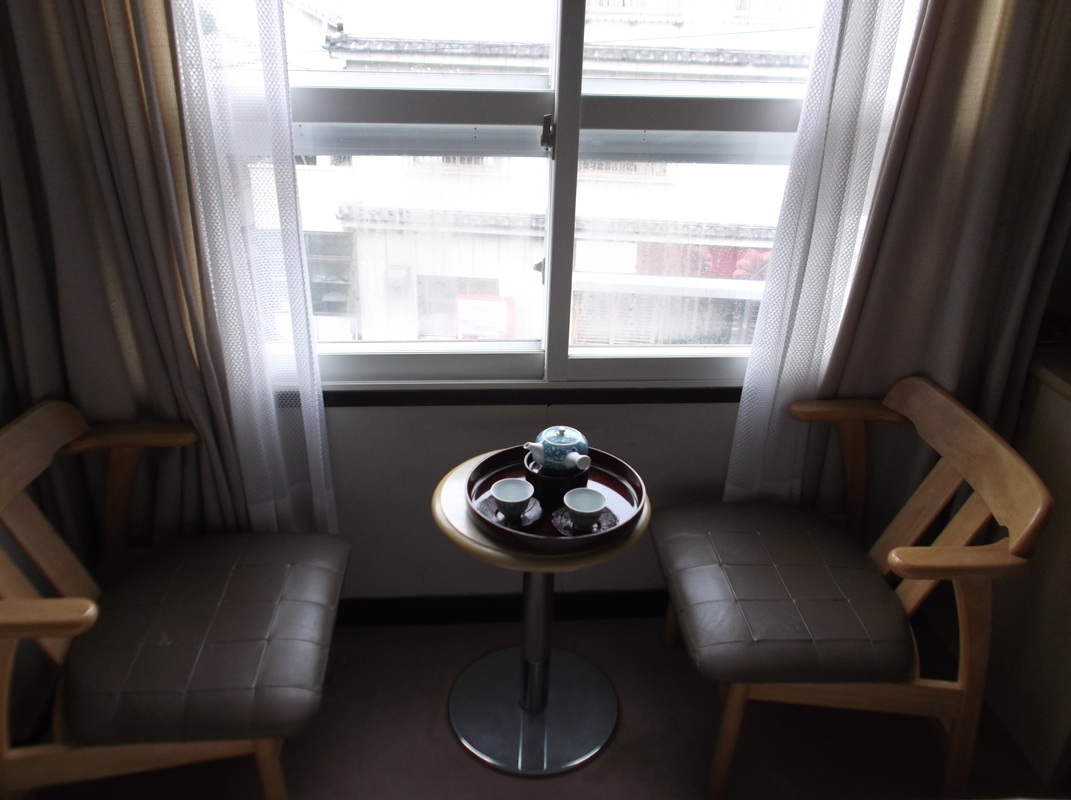
Photo by Gary Mawyer
Dinner was our first clue that Miyajima is secretly a gastronomic paradise. I had the fried oysters, not expecting to see oysters as salty and sweet as the little Pamlico Sound oysters from the Outer Banks, and yet as snowy and huge as the succulent monsters that used to be harvested from the mouth of the Rappahannock in the Chesapeake Bay. I hadn’t seen oysters like this since I was a child, back when oysters cost 89 cents a pint. Like the Walrus and the Carpenter, we wept as we ate them, marveling that one of the lost palantirs of Virginia cuisine was somehow alive and thriving a world away on a temple island in Japan of all places. It turns out the Miyajima oysters are mostly farmed, and farmed with a degree of success that deserves be called supernatural.
I could go on and on about the cuisine of Miyajima. Anyone could. The next day at a neighborhood grocery we bought peaches with flavor so intense they belonged in the feast of Prospero. A street vendor sold grilled octopi cut into shapes like maple leaves, and probably some other street vendor had mastered the art of cutting maple leaves into shapes like octopi. On a back street we found a tea shop in a house that was once a daimyo’s mansion, and had little sweet jellies with green tea, the only other customers a quartet of Russians. But I digress. Of course digression may be the point here.
I could go on and on about the cuisine of Miyajima. Anyone could. The next day at a neighborhood grocery we bought peaches with flavor so intense they belonged in the feast of Prospero. A street vendor sold grilled octopi cut into shapes like maple leaves, and probably some other street vendor had mastered the art of cutting maple leaves into shapes like octopi. On a back street we found a tea shop in a house that was once a daimyo’s mansion, and had little sweet jellies with green tea, the only other customers a quartet of Russians. But I digress. Of course digression may be the point here.
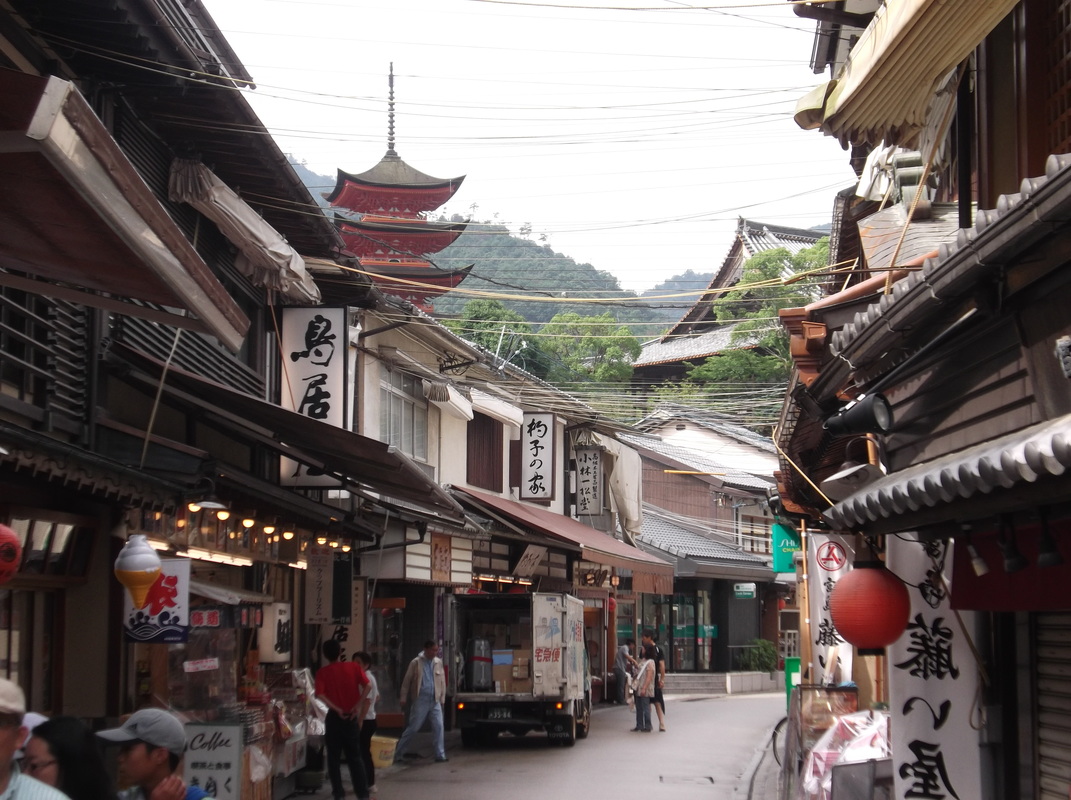
Photo by Gary Mawyer
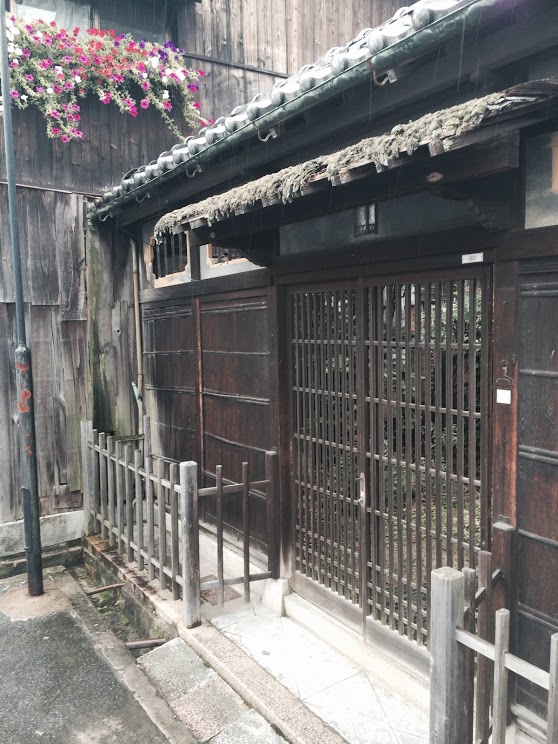
Photo by Alex Mawyer
Digression was certainly the point for the little tame deer that overran the place, posing artfully for photos and nosing into people’s bags, purses and pockets, gnawing at camera straps and in some cases even eating newspaper. We thought of calling them Shimbun deer since they avidly consumed the news but they were really Mooch deer, very cute but frightful mooches, who knew the doors to every restaurant and stood at the door even before the restaurants opened.
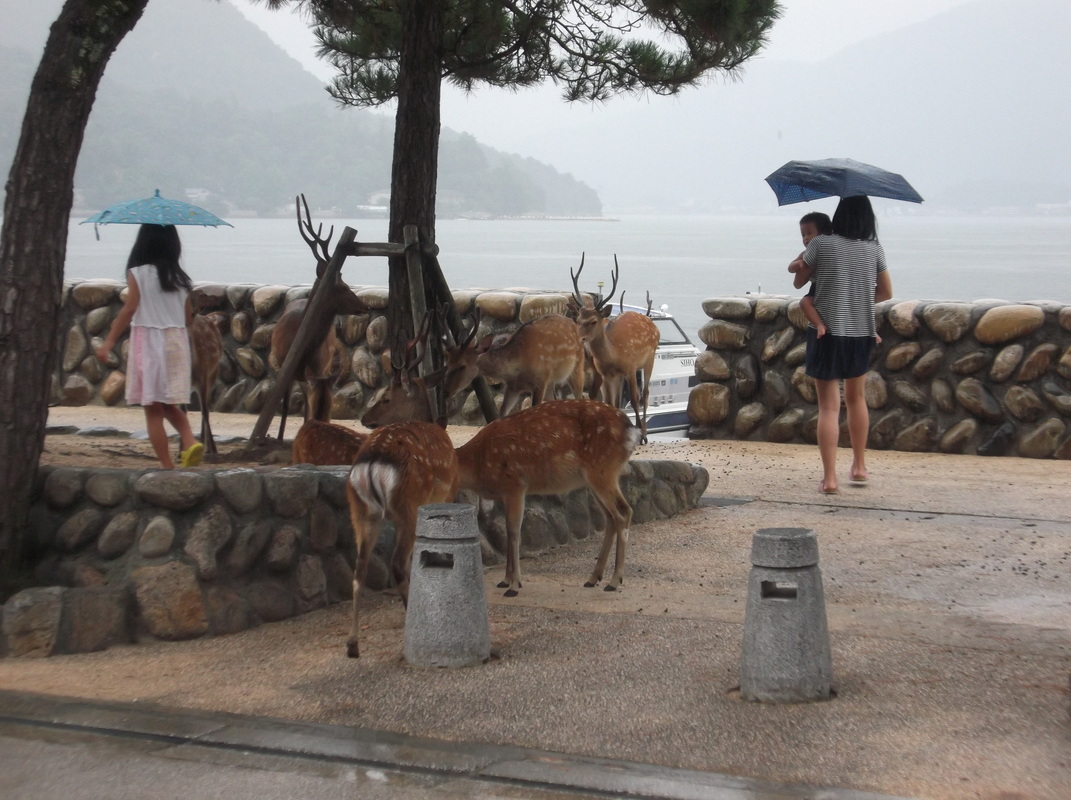
Photo by Gary Mawyer
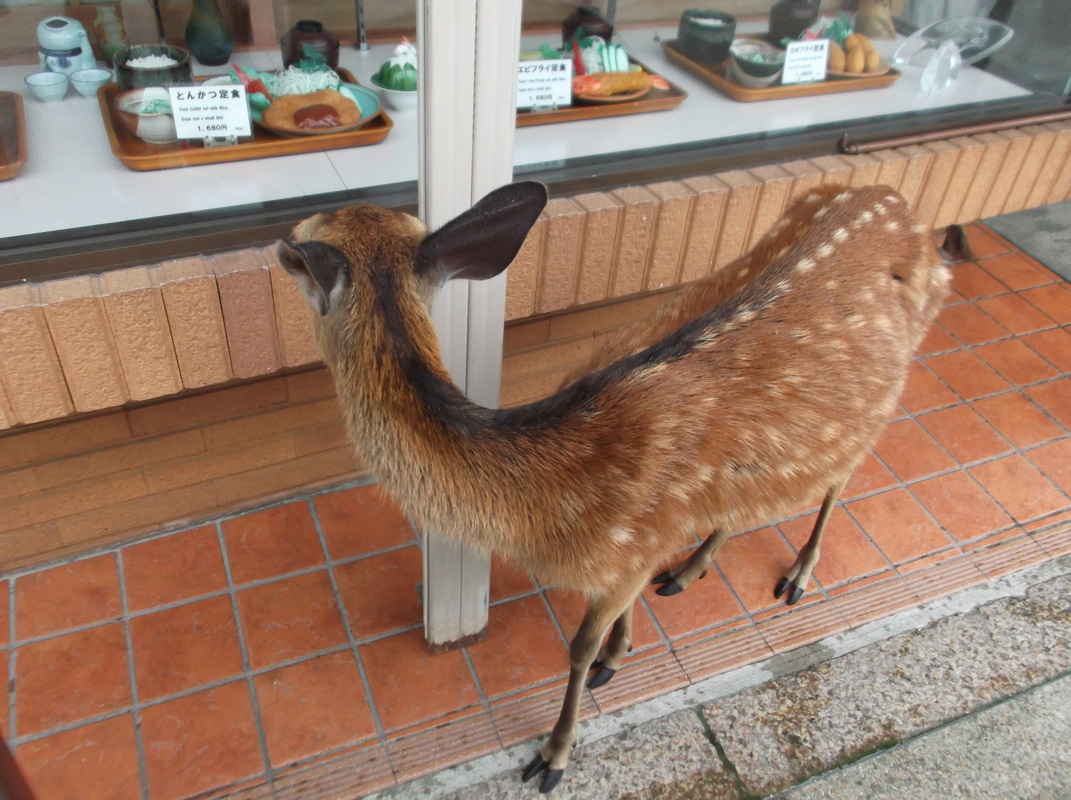
Photo by Gary Mawyer
Unfortunately the famous Miyajima macaques were gone. Our landlady told us that their rudeness and chronic misbehavior had finally become intolerable and they had been resettled where bags of snacks and people’s lunches, hats, shoes, purses and anything else that could be carried into a tree would not tempt them. The concept of a re-education camp for pestilential monkeys was well beyond my fifty words of Japanese. The suggestion that they had run for Congress and won didn’t translate either. Anyway, that’s the story of how it came to pass that we did not manage to do the one thing we came to Japan specifically to do, bask with the semi-wild macaques of Miyajima and allow their zen-like wisdom to steep into us.
Most people come to Miyajima for the temples and especially for the Itsukushima Shrine and Miyajima Torii. The Miyajima Torii is one of the most photographed objects on the planet for obvious reasons. I bought my daughter a “safe delivery” charm at the Itsukushima Shrine, which got me charmingly recognized as a grandfather by the girl selling them. With the birth of my handsome grandson several months later, I have every reason to believe this charm worked very well.
Most people come to Miyajima for the temples and especially for the Itsukushima Shrine and Miyajima Torii. The Miyajima Torii is one of the most photographed objects on the planet for obvious reasons. I bought my daughter a “safe delivery” charm at the Itsukushima Shrine, which got me charmingly recognized as a grandfather by the girl selling them. With the birth of my handsome grandson several months later, I have every reason to believe this charm worked very well.
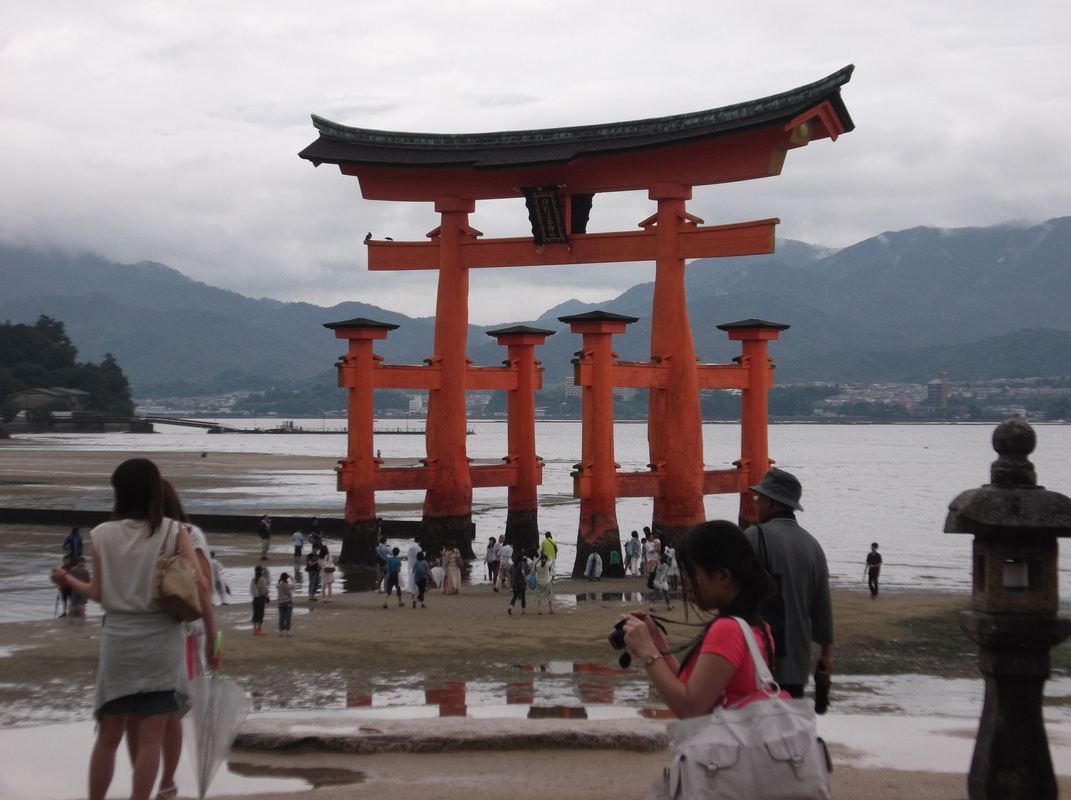
Photo by Gary Mawyer
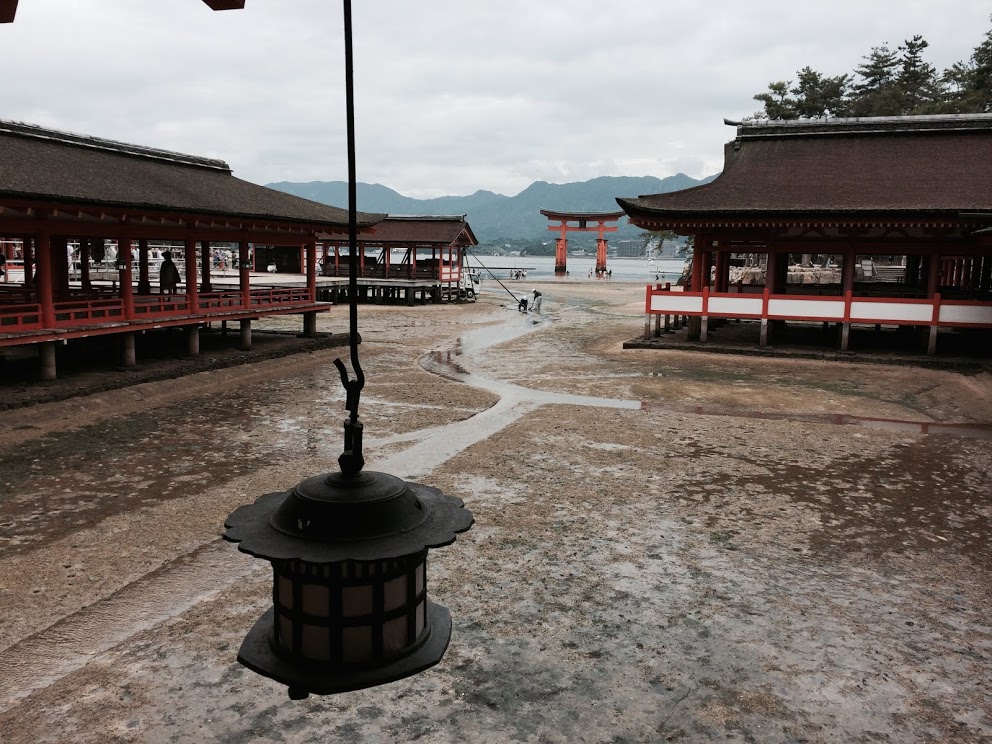
Photo by Alex Mawyer
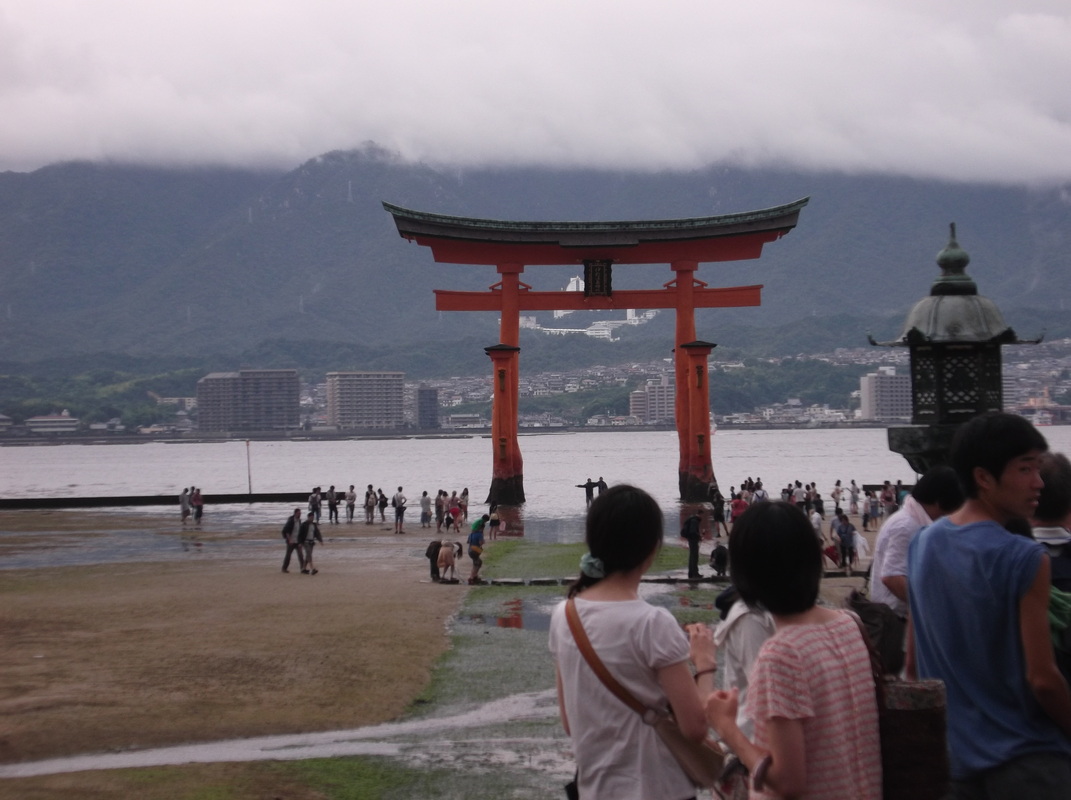
Photo by Gary Mawyer
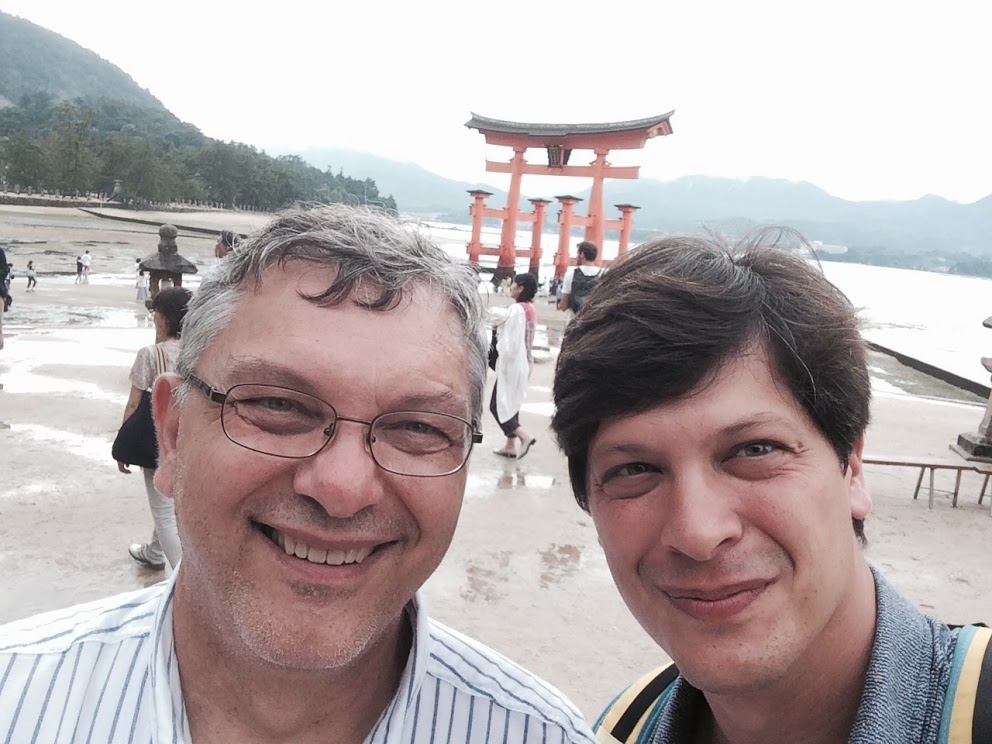
Photo by Alex Mawyer
The tourist literature does not achieve clarity about Miyajima. The island is a bit larger than its town and temple area, but the temple environs are as far as the tourists have much reason to go. Some guidebooks suggest the visitor can take in Miyajima as a day trip from Hiroshima, and see everything there is to see. Others suggest an overnight stay, although there are not very many places to stay and the town unofficially shuts down not long after dark. The traveler who wants to get away from it all but not very far away, could be advised to stay a week and devote the last four days to a detailed enjoyment of the finer points of peace and quiet. Another excellent plan would be to move in and never leave. There is an empty economic niche now that the macaques are gone. If those shoes seem too hairy to fill, there might even be other ways to contribute.
Though the August heat and the near-continuous rain made Miyajima a rather steamy place, there were plenty of people and there was lots of shopping. We loaded up on souvenirs and took note that westerners were scarce and other Americans none. For so much tourist literature, the yield seemed thin. And yet we did see the same Italians we saw in Nikko, north of Tokyo and halfway back up Honshu. It seemed almost peculiar. Japan is not a small country, whatever they tell you, though it has a unique and rather imbricated geography. Most of the western visitors, we concluded, go to the exact same spots and the few who don’t can easily still wind up going in sparse numbers to “the other spots.”
Though the August heat and the near-continuous rain made Miyajima a rather steamy place, there were plenty of people and there was lots of shopping. We loaded up on souvenirs and took note that westerners were scarce and other Americans none. For so much tourist literature, the yield seemed thin. And yet we did see the same Italians we saw in Nikko, north of Tokyo and halfway back up Honshu. It seemed almost peculiar. Japan is not a small country, whatever they tell you, though it has a unique and rather imbricated geography. Most of the western visitors, we concluded, go to the exact same spots and the few who don’t can easily still wind up going in sparse numbers to “the other spots.”
Photo by Alex Mawyer
Photo by Alex Mawyer
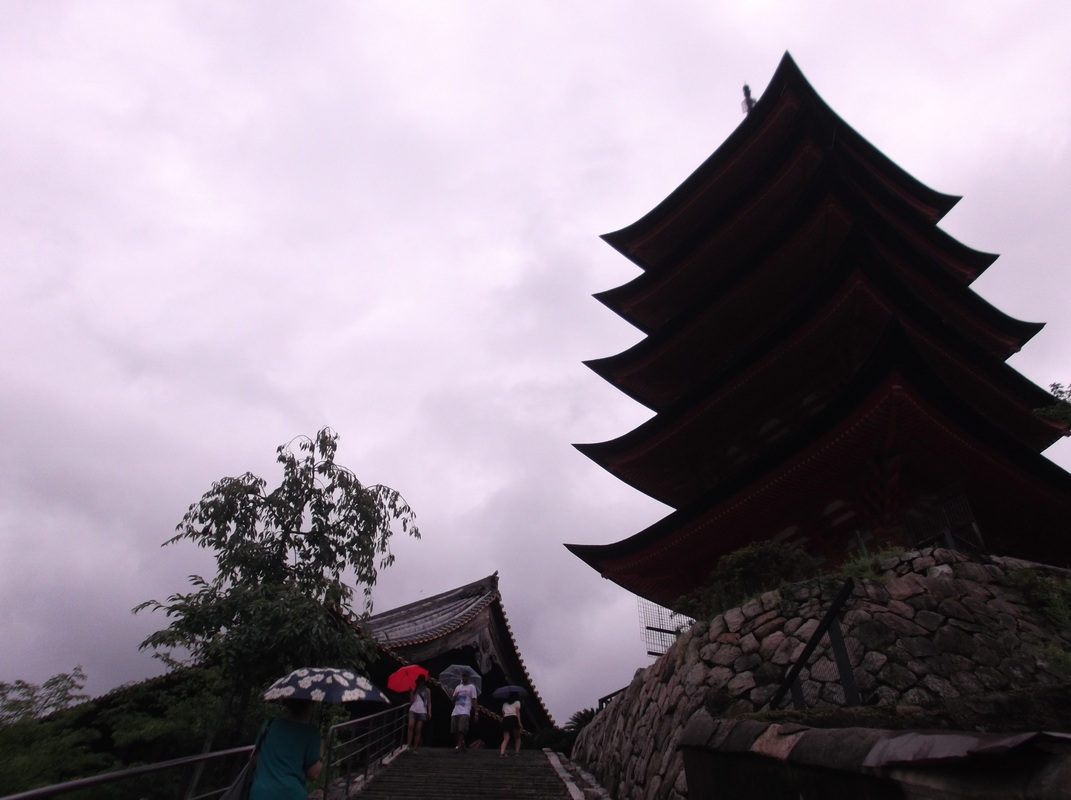
Photo by Gary Mawyer
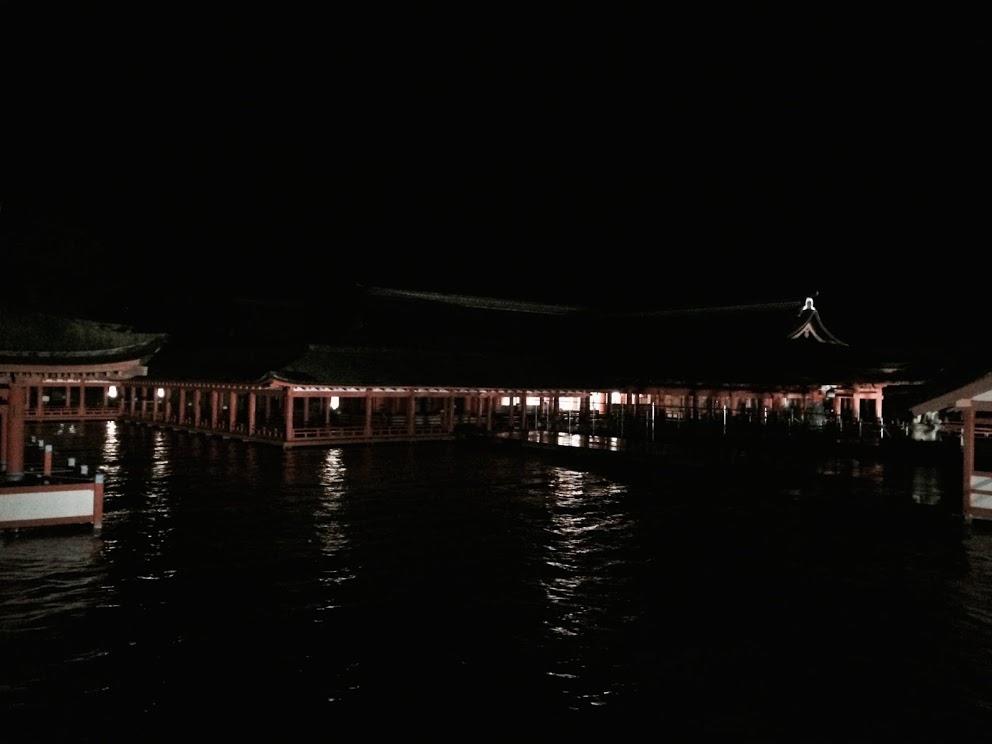
Photo by Alex Mawyer
At dawn we would have to leave. We would be on the train—the shinkansen to Tokyo, and then the local to Narita—all day. We had reservations in Narita for the last night of this trip to Japan, and part of a day to investigate Narita before flying home. That will be the subject of my next blog post.

 RSS Feed